

Winners' Makers
The story of G.D.E. Bertoni, the Italian manufacturer behind one of the world's most coveted trophies: the FIFA World Cup trophy. Read the full article, originally published in Arcipelago issue 05.

Photography: Giovanni Benvenuto (@thegiovannino)
Words: Alessandro Ranieri (@alessandroranieri24)
Far from the hustle and bustle, congested roads, and smog of Lombardy’s most famous capital, Paderno Dugnano represents a town of just 47,000. The small population makes it feel like an extended family. As a result, even the workplace becomes a convivial place. Take G.D.E. Bertoni, at Via Ezio Vanoni 3 in Paderno, a leading company - with just 12 employees - in the design, creation and production of the world’s most important sports trophies and medals. A perfect blend between young apprentices, dedicated to learning a craft that requires patience, seriousness, and accuracy, as well as highly specialized master craftspeople.
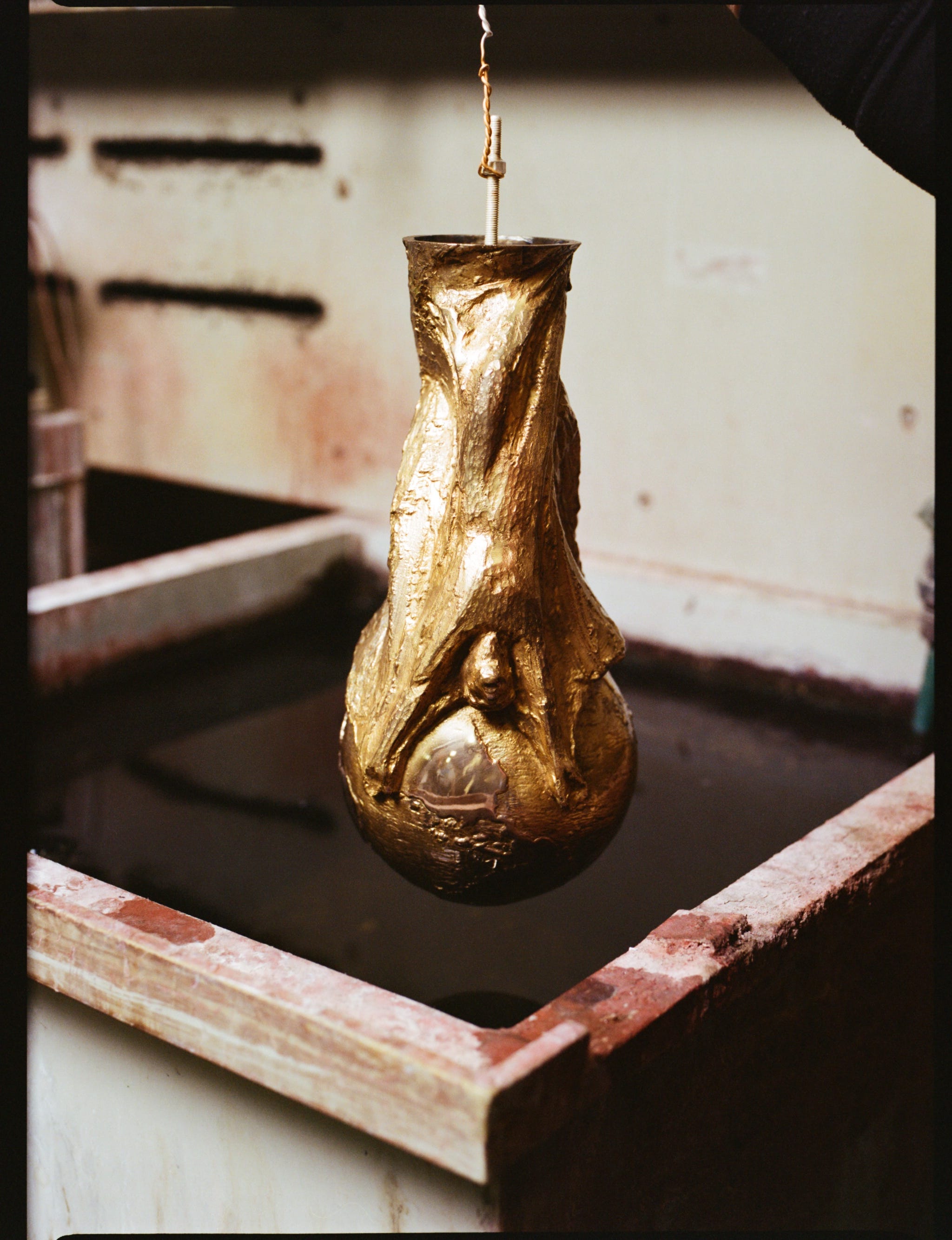
Today, the company is run by Valentina Losa, great-granddaughter of founder Emilio Bertoni, who took over from her father Giorgio and grandfather Eugenio in 2010. “It took me about a decade to understand how to run the company and keep the legacy of my father and grandfather alive,” Valentina tells us in our interview. “Going from being the boss’s daughter to being the boss was not an easy change for all the employees, especially those who watched me grow up”. After producing the medals for the 1960 Olympic Games in Rome, Bertoni established its name in 1971 when it won the competition organized by FIFA to design and produce the new World Cup™ to replace the old Rimet trophy. The Rimet Cup, in use from 1930 to 1970, stated that the trophy would be awarded to the country whose team had won the World Cup three times, although not consecutively. The last one (all traces of which have now mysteriously disappeared) went to Brazil, who also won in 1958 and 1962 after beating Italy 4-1 in the final.
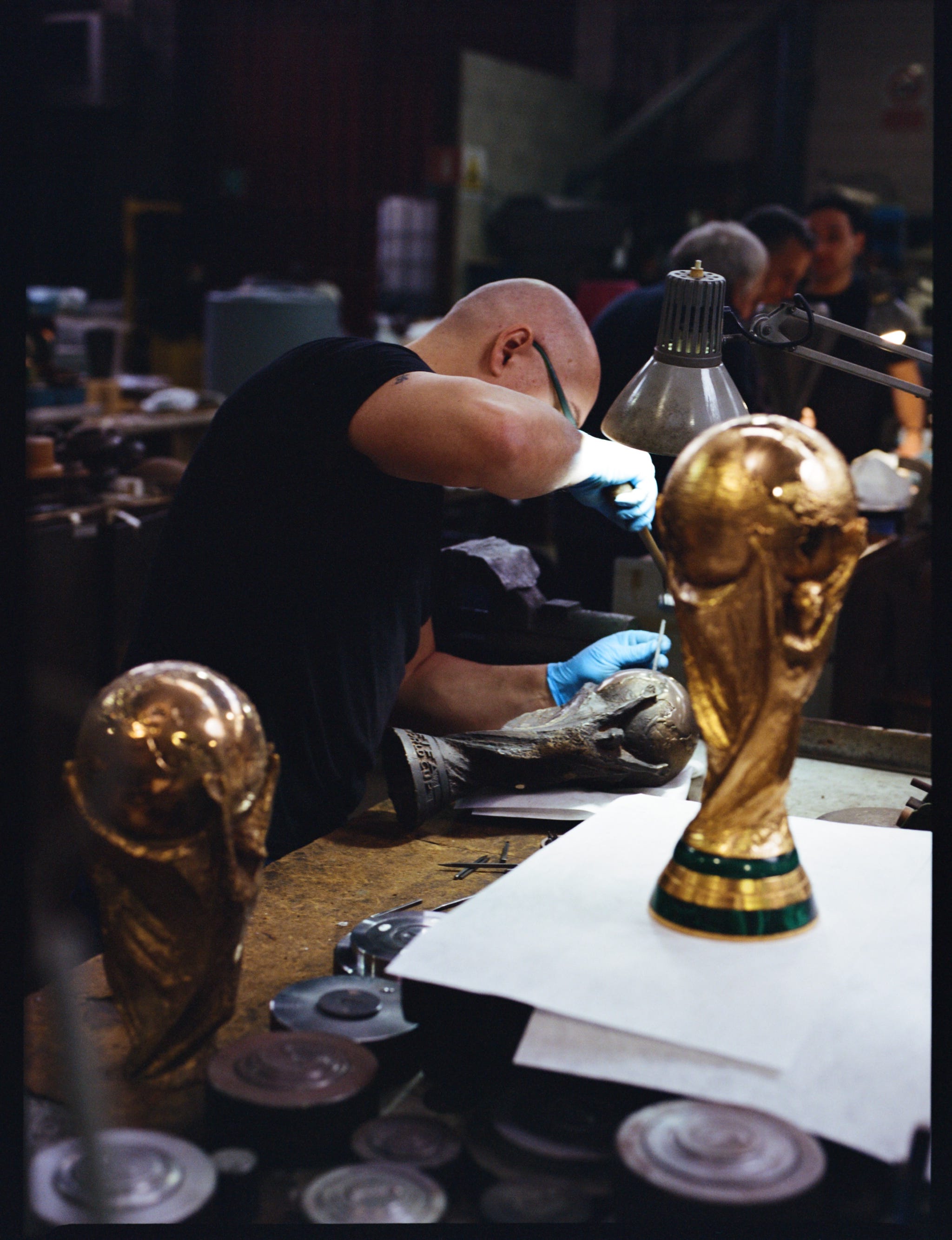
The challenge of designing a new trophy was daunting, but far from impossible. For G.D.E. Bertoni, led by Giorgio Losa, affectionately known to his staff as ‘Il Dottore’, the FIFA-organized competition was a turning point in their history. Not only the world’s most coveted trophy but also a symbol of victory off the pitch. The 36.8-centimetre-tall, 6-kilogram, and 175gram trophy, made of solid 18-carat gold and decorated with two green malachite ribbons, symbolizes a collective success under one flag. Consequently, it could not have been an ordinary artefact. The original trophy remains with FIFA, while the Lombardy-based company produces an almost identical 24-carat gold-plated brass replica for the winning national teams. The current version of the trophy was developed with a specific idea in mind: replace the rough and austere style of the Rimet Cup, inspired by the French Art Deco of 1926, with a smooth, almost “religious” texture. A hymn to the world of sport that would highlight a consecration, a state of union for an entire country.
To take part in the competition organised by FIFA, candidates had to present their proposals at the association’s headquarters in Zürich. So, between August and September 1971, at Bertoni’s laboratories in Via Volta, Eugenio Losa built a three-dimensional wax model of the trophy. To protect it during shipment to Switzerland, he commissioned an experienced craftsman to build an ad hoc wooden structure. From that moment on, G.D.E. Bertoni became FIFA’s manufacturer for the World Cup™, as well as the UEFA European Championship, UEFA Europa League, UEFA Super Cup, UEFA Champions League, and other trophies. In 1995, Losa decided to reduce its workforce from 180 to 12. The decision seemed ‘forced’, determined by the desire to get the company free of stains and mistakes, maintaining the idea of a small family.
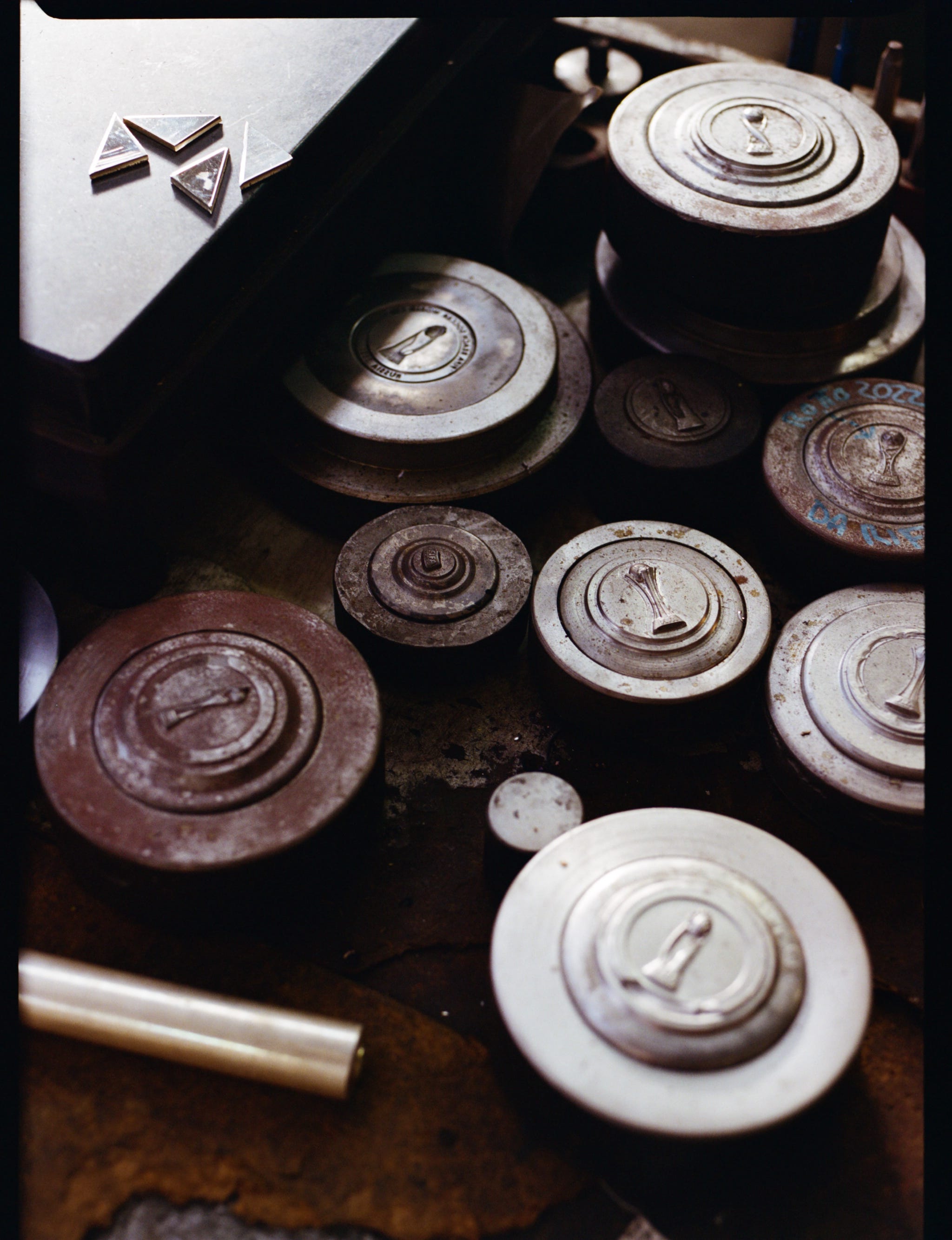
For Giorgio, the company was his fourth child, built in his image. There was no difference between work and private life. The two merged into a single sphere of passion and boundless affection for the people involved in the work. It is a principle that Valentina, who took over the management of the company after the death of her father in 2010, also strongly believes in. “When I recruit, I look for shared values, for people with whom I feel comfortable talking about something other than work. I consider this an essential aspect”.
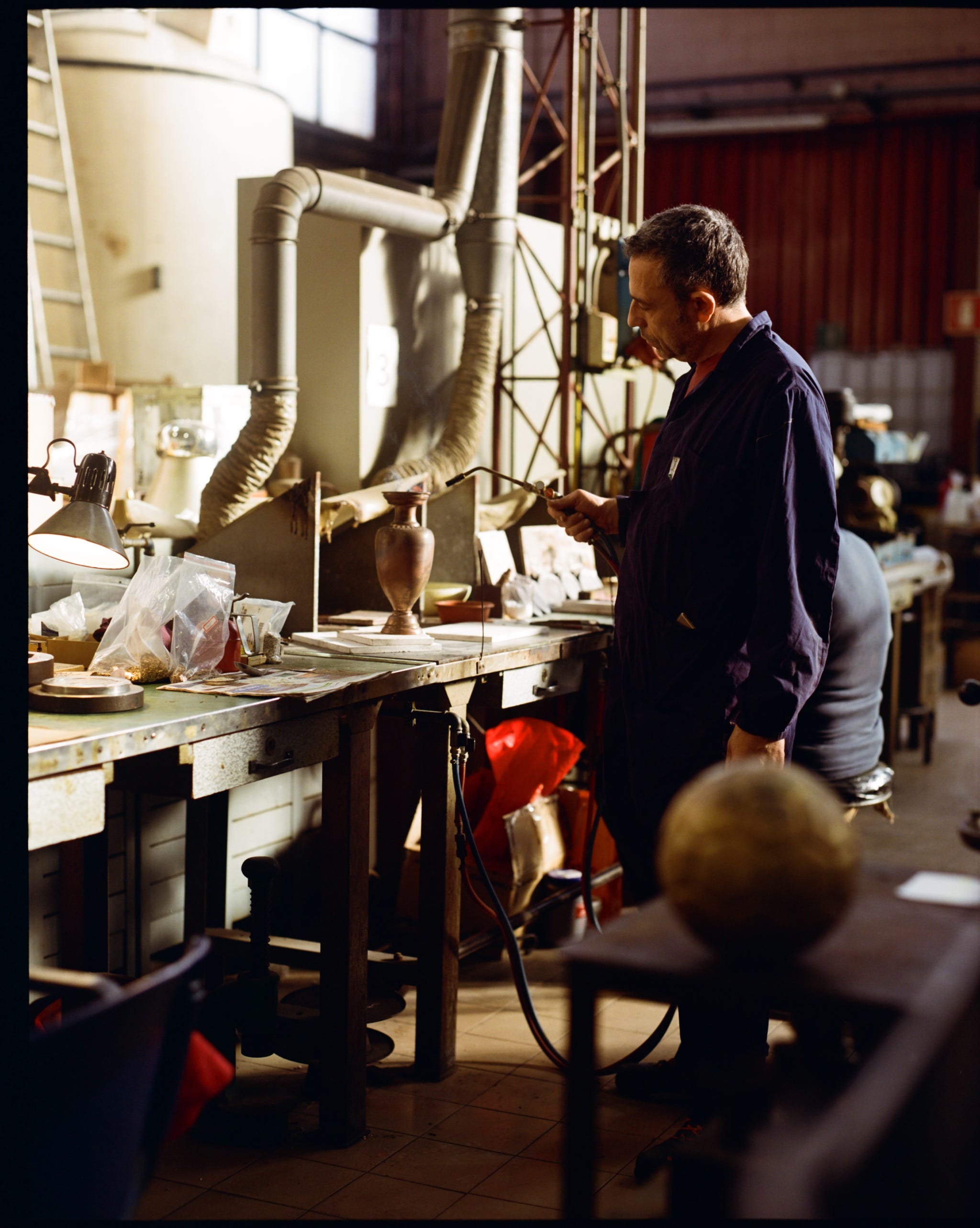
The premises are still the same, as is the intensity and obsessive precision applied to crafting the world’s most desirable trophies. The factory of champions is more alive than ever, ready to forge the dreams of nations once again.